Cash Assistance & Tax Credits › Guide
TANF: How State Cash Help Works and How to Apply
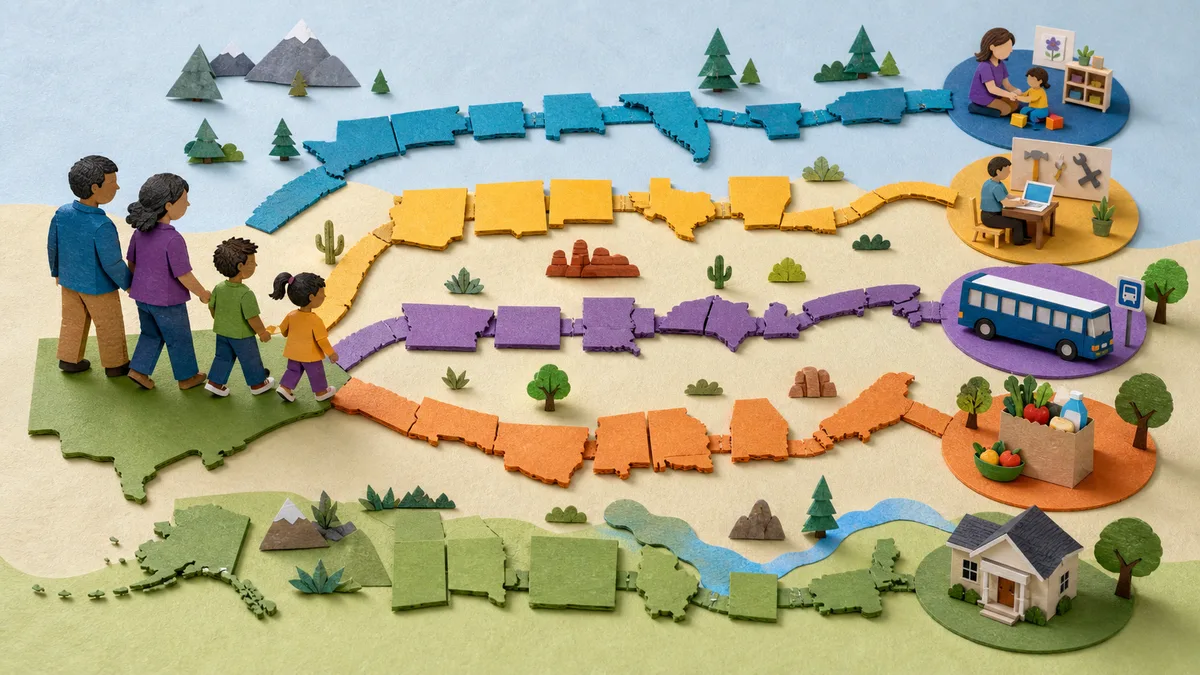
TANF can give short-term cash and work support to some families with children. Your state sets the income rules, payment, work steps, and name of the program.
There is no one national TANF check. The U.S. government does not pay TANF cash to people. States, territories, and some tribes do. Use your state or tribal office before you plan around any dollar amount.
What can TANF help pay for?
A family may use cash help for basic needs such as food, rent, power, child care, or items for a child.
A state may also offer job training, school help, or a one-time crisis payment. Some of this help may use a different form from the monthly cash program.
Ask about every path. A family that does not get a monthly check may still get child care or job help.
Who may get TANF?
TANF is for families with low income and a child. Some states also cover a pregnant person. You must live in the state where you apply. The state decides:
- How much income can count
- If bank funds or other items count
- Which child and caregiver rules apply
- Which work steps are needed
- How long help can last
A grandparent or other caregiver may be able to seek a child-only case. In that case, the child gets help but the adult may not be part of the cash case.
Some tribes run their own TANF program. If you live in a tribal area, ask which office serves you.
How long can TANF last?
Federal TANF funds have a 60-month lifetime limit for most adults or minor heads of a home. That is five years in all, not five years each time you apply.
A state can use a shorter limit. A state may also keep paying some families past five years because of a hardship or family violence. It can do this for up to 20% of its cases. Ask the worker how each month will count.
Keep each approval and closure letter. If you move to a new state, past months may still matter.
Will you have to work or train?
Many adults must take part in a work plan. It may include a job, job search, school, training, or other approved tasks.
Tell the worker about a disability, lack of child care, unsafe home, or other barrier. Ask which good-cause or family-violence rules may apply. Do not just miss an appointment.
Get the plan in writing. Track hours and save proof.
What papers should you gather?
- ID and Social Security numbers
- Birth records or school proof for children
- Pay stubs and benefit letters
- Bank records if the state asks
- Rent, power, child care, and ride costs
- Immigration papers for people who seek aid
A state may not need every item. Send what it asks for and save a copy.
How do you apply?
- Use the ACF state and tribal TANF office list.
- Open the state site and find its cash aid form.
- Apply online, by phone, by mail, or at the office.
- Finish the interview and send missing proof.
- Read the payment, work, and review rules.
Applying is free. No one can sell approval or a larger check.
How is the money paid?
States pay TANF on a debit card or by direct deposit. Some states can also mail a paper check.
To check a card balance, look at your store receipt or your state's app, if it has one. You can also call the number on the back of the card.
What other help should you check?
TANF is only one program. Check SNAP food help, Medicaid or CHIP, child care aid, and energy help. Use our benefits estimator for a short list to ask about. Adults without children can read our General Assistance guide.
If the state says no, get the reason in writing. Check the facts and the fair hearing date. The payment is based on state rules, so a number from another state will not prove an error.
Your next step. The free TANF screening guide helps you find your state's cash-assistance rules and application route without guessing a payment amount. All tools →
Sources
- eCFR — 45 CFR 264.1 TANF time limits (up to date as of Nov. 6, 2026)
- Administration for Children and Families — Temporary Assistance for Needy Families (TANF) overview
- Administration for Children and Families — State & Tribal TANF Program Contact Information
- USA.gov — Welfare benefits or Temporary Assistance for Needy Families (TANF)
- eCFR — 45 CFR 260.31 What does the term “assistance” mean? (nonrecurrent short-term crisis benefits; up to date as of Nov. 6, 2026)